
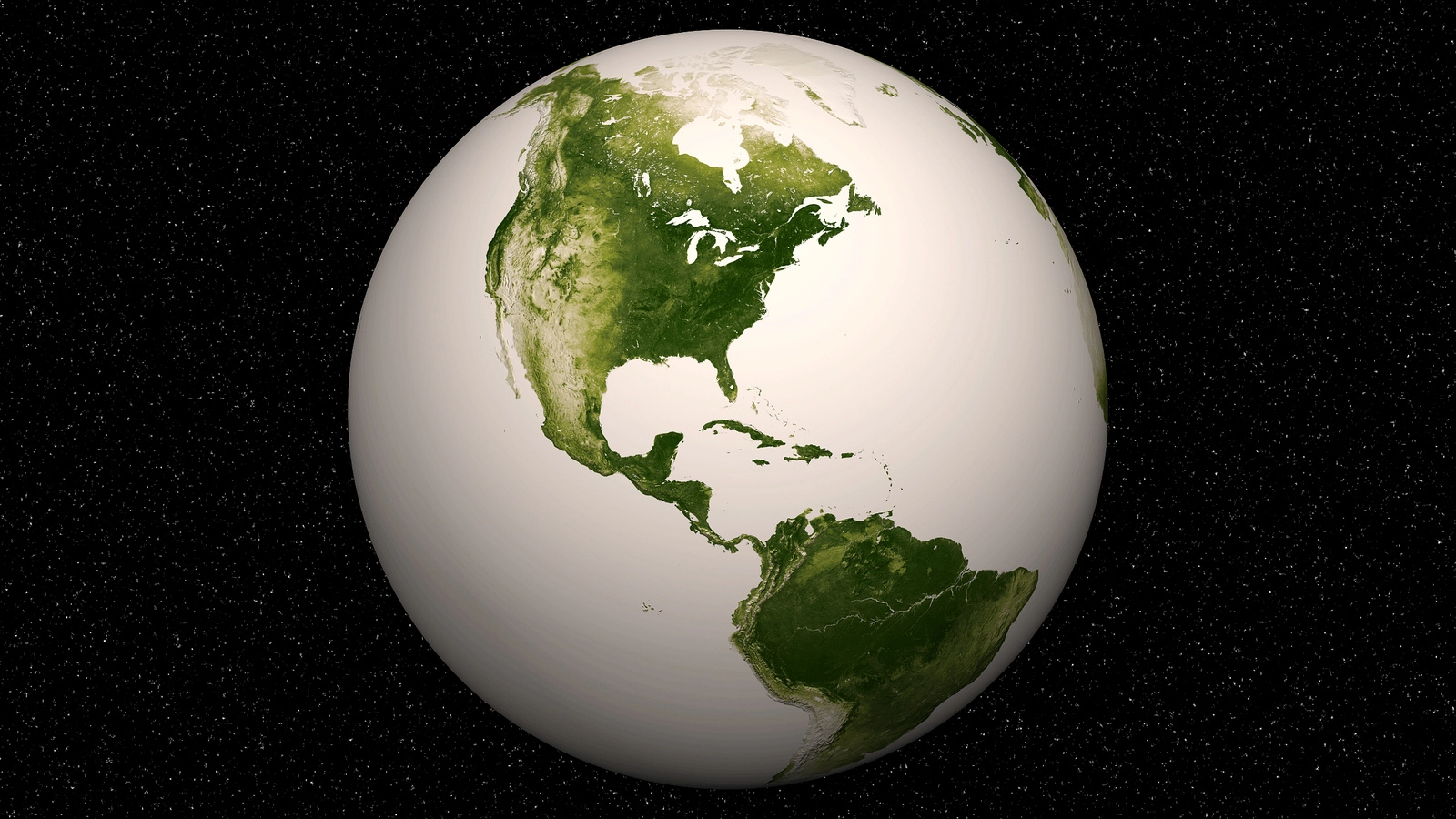
Vegetation indices compress canopy optics into stable, comparable numbers. Healthy leaves absorb red (chlorophyll) and strongly scatter NIR (leaf structure). Stress reduces red absorption and/or NIR scattering. The goal isn’t a prettier map; it’s a reliable, repeatable signal you can threshold, alert on, and verify in the field.
NDVI  = (NIR - Red) / (NIR + Red)
EVI   = G * (NIR - Red) / (NIR + C1*Red - C2*Blue + L)   // common: G=2.5, C1=6, C2=7.5, L=1
EVI2  = 2.5 * (NIR - Red) / (NIR + 2.4*Red + 1)          // when Blue is noisy/unavailable
SAVI  = (1 + L) * (NIR - Red) / (NIR + Red + L)          // L≈0.5; soil-adjusted, early season
MSAVI2= (2*NIR + 1 - sqrt((2*NIR + 1)^2 - 8*(NIR - Red))) / 2
CI_re = (NIR / RedEdge) - 1 // Sentinel-2: RedEdge ∈ {B5,B6,B7}| Situation | Prefer | Rationale |
|---|---|---|
| Dense canopies (LAI high) | EVI or CIre | NDVI saturates; EVI extends dynamic range; red-edge is more linear w.r.t. chlorophyll. |
| Early season / sparse cover | SAVI/MSAVI2 or EVI2 | Soil correction helps; EVI2 avoids blue-band noise. |
| Early stress detection | CIre | Red-edge shifts earlier than broadband NDVI/EVI. |
| Regional monitoring / anomalies | NDVI (MODIS/VIIRS) anomalies | Long, consistent records → robust baselines. |
| Mission | Red | NIR | Red-Edge | Blue | GSD |
|---|---|---|---|---|---|
| Sentinel-2 L2A | B4 (665 nm) | B8 (842 nm) / B8A (865 nm) | B5/B6/B7 (705/740/783 nm) | B2 (490 nm) | 10 m (B2/B4/B8), 20 m (B5/B6/B7/B8A) |
| Landsat 8/9 SR | B4 (0.64–0.67 µm) | B5 (0.85–0.88 µm) | — | B2 (0.45–0.51 µm) | 30 m |
| HLS (S30/L30) | S2 B4 / L8 B4 (harmonized) | S2 B8A / L8 B5 (harmonized) | S2 B5–B7 only | S2 B2 / L8 B2 | 30 m (harmonized SR) |
| MODIS (Terra/Aqua) | Band 1 (620–670 nm) | Band 2 (841–876 nm) | — | Band 3 (459–479 nm) | 250 m (VI), 500 m/1 km (others) |
QA_PIXEL bits for cloud/shadow/snow; MODIS/VIIRS use VI quality layers.1) Baseline: For each parcel and day-of-year (DOY), compute multi-year median NDVI (rolling window DOY±15). 2) Smooth current season (e.g., 3x compositing windows or Savitzky–Golay). 3) Anomaly_t = NDVI_t - Baseline_DOY_median Zscore_t = (NDVI_t - μ_baseline) / σ_baseline 4) Alert rule: anomaly < -0.15 OR z < -1.0 for 2 consecutive windows → field check. Dense canopies: also watch EVI drop ≥ 0.08 vs 4-week median. Red-edge early warning: CI_re drop ≥ 0.10 vs parcel DOY baseline.
If you need cadence over clouds, use HLS (Harmonized Landsat–Sentinel). It applies bandpass adjustments and BRDF normalization so indices are comparable at 30 m. Keep your thresholds sensor-agnostic by anchoring to each parcel’s historical baseline rather than absolute values.
var s2sr = ee.ImageCollection('COPERNICUS/S2_SR_HARMONIZED')
  .filterBounds(parcels.geometry())
  .filterDate('2025-03-01', '2025-10-31')
  .filter(ee.Filter.lte('CLOUDY_PIXEL_PERCENTAGE', 40))
  .map(function(img){
    var qa = img.select('QA60');
    var cloud = qa.bitwiseAnd(1<<10).neq(0);
    var cirrus = qa.bitwiseAnd(1<<11).neq(0);
    var mask = cloud.or(cirrus).not();

    var red = img.select('B4').multiply(1e-4);
    var nir = img.select('B8').multiply(1e-4);
    var blue= img.select('B2').multiply(1e-4);
    var re5 = img.select('B5').multiply(1e-4);
    var re6 = img.select('B6').multiply(1e-4);
    var re7 = img.select('B7').multiply(1e-4);

    var ndvi = nir.subtract(red).divide(nir.add(red)).rename('NDVI');
    var evi  = nir.subtract(red)
                 .multiply(2.5)
                 .divide(nir.add(red.multiply(6)).subtract(blue.multiply(7.5)).add(1))
                 .rename('EVI');
    var evi2 = nir.subtract(red)
                  .multiply(2.5)
                  .divide(nir.add(red.multiply(2.4)).add(1))
                  .rename('EVI2');
    var cire = nir.divide(re5).subtract(1).rename('CIre');

    return img.updateMask(mask).addBands([ndvi, evi, evi2, cire])
              .set('date', img.date().format('YYYY-MM-dd'));
  });

var step = 12;
var start = ee.Date('2025-03-01');
var end   = ee.Date('2025-10-31');

var windows = ee.List.sequence(0, end.difference(start,'day').subtract(step), step)
  .map(function(d){
    var winStart = start.advance(ee.Number(d), 'day');
    var winEnd   = winStart.advance(step, 'day');
    var comp = s2sr.filterDate(winStart, winEnd)
      .select(['NDVI','EVI','EVI2','CIre'])
      .median()
      .set('window_start', winStart.format('YYYY-MM-dd'))
      .set('window_end',   winEnd.format('YYYY-MM-dd'));
    return comp;
  });

var compCol = ee.ImageCollection.fromImages(windows);

var reducer = ee.Reducer.median().combine({
  reducer2: ee.Reducer.percentile([75]),
  sharedInputs: true
});

var zonal = compCol.map(function(img){
  var stats = img.reduceRegions({
    collection: parcels,
    reducer: reducer,
    scale: 10,
    tileScale: 4
  }).map(function(f){
    return f.set({
      window_start: img.get('window_start'),
      window_end:   img.get('window_end')
    });
  });
  return stats;
}).flatten();

Export.table.toDrive({
  collection: zonal,
  description: 'parcel_vi_summaries_2025',
  fileFormat: 'CSV'
});
import xarray as xr, rioxarray as rxr, geopandas as gpd
import numpy as np, pandas as pd
from pathlib import Path

cogs_dir = Path("/data/S2_SR")
dates = sorted({p.name.split("_")[1] for p in cogs_dir.glob("S2_*_B4.tif")})
parcels = gpd.read_file("/data/parcels.gpkg").to_crs(32633)

def stats(a):
    d = a.data.compressed() if np.ma.isMaskedArray(a.data) else a.data
    d = d[np.isfinite(d)]
    if d.size == 0: return np.nan, np.nan, 0
    return np.median(d), np.percentile(d, 75), d.size

rows = []
for d in dates:
    red  = rxr.open_rasterio(cogs_dir/f"S2_{d}_B4.tif", masked=True).squeeze()
    nir  = rxr.open_rasterio(cogs_dir/f"S2_{d}_B8.tif", masked=True).squeeze()
    blue = rxr.open_rasterio(cogs_dir/f"S2_{d}_B2.tif", masked=True).squeeze()
    re5  = rxr.open_rasterio(cogs_dir/f"S2_{d}_B5.tif", masked=True).squeeze()

    ndvi = (nir - red) / (nir + red + 1e-6)
    evi  = 2.5 * (nir - red) / (nir + 6*red - 7.5*blue + 1)
    evi2 = 2.5 * (nir - red) / (nir + 2.4*red + 1)
    cire = (nir / (re5 + 1e-6)) - 1

    for _, poly in parcels.iterrows():
        geom = [poly.geometry]
        ndvi_med, ndvi_p75, n = stats(ndvi.rio.clip(geom, ndvi.rio.crs, drop=False))
        evi_med,  evi_p75,  _ = stats(evi.rio.clip(geom, evi.rio.crs, drop=False))
        evi2_med, evi2_p75, _ = stats(evi2.rio.clip(geom, evi2.rio.crs, drop=False))
        cire_med, cire_p75, _ = stats(cire.rio.clip(geom, cire.rio.crs, drop=False))

        rows.append({
          "date": pd.to_datetime(d),
          "parcel_id": poly["parcel_id"],
          "ndvi_med": ndvi_med, "ndvi_p75": ndvi_p75, "px_valid": int(n),
          "evi_med": evi_med, "evi_p75": evi_p75,
          "evi2_med": evi2_med, "evi2_p75": evi2_p75,
          "cire_med": cire_med, "cire_p75": cire_p75
        })

df = pd.DataFrame(rows).sort_values(["parcel_id","date"])

out = []
for pid, g in df.groupby("parcel_id"):
    g = g.set_index("date").sort_index()
    g_roll = g.rolling("14D").median()
    g_roll["parcel_id"] = pid
    out.append(g_roll.reset_index())

df_roll = pd.concat(out).sort_values(["parcel_id","date"])
df_roll.to_csv("/data/parcel_vi_14d.csv", index=False)
gdal_translate input.tif output_cog.tif -of COG -co COMPRESS=DEFLATE -co NUM_THREADS=ALL_CPUS
gdalbuildvrt -separate stack.vrt NIR.tif RED.tif
gdal_calc.py -A NIR.tif -B RED.tif --calc="(A-B)/(A+B+1e-6)" --outfile NDVI_cog.tif --of COG --co COMPRESS=DEFLATE
WITH hist AS (
  SELECT parcel_id,
         EXTRACT(doy FROM date)::int AS doy,
         ndvi_med
  FROM parcel_vi_14d
  WHERE date < DATE '2025-01-01'
),
baseline AS (
  SELECT h1.parcel_id, h1.doy AS doy_ref,
         PERCENTILE_CONT(0.5) WITHIN GROUP (ORDER BY h2.ndvi_med) AS ndvi_baseline
  FROM hist h1
  JOIN hist h2
    ON h1.parcel_id = h2.parcel_id
   AND h2.doy BETWEEN h1.doy - 15 AND h1.doy + 15
  GROUP BY h1.parcel_id, h1.doy
)
SELECT cur.parcel_id,
       cur.date,
       cur.ndvi_med,
       b.ndvi_baseline,
       (cur.ndvi_med - b.ndvi_baseline) AS ndvi_anom,
       (cur.ndvi_med - b.ndvi_baseline) < -0.15 AS ndvi_alert
FROM parcel_vi_14d cur
JOIN baseline b
  ON b.parcel_id = cur.parcel_id
 AND b.doy_ref   = EXTRACT(doy FROM cur.date)::int
WHERE cur.date BETWEEN DATE '2025-03-01' AND DATE '2025-10-31'
ORDER BY cur.parcel_id, cur.date;
We turn ingest, QA, indices, smoothing, and anomaly logic into parcel-level insights—dashboards, alerts, and exports—via API, WMTS/XYZ, or a custom web GIS.